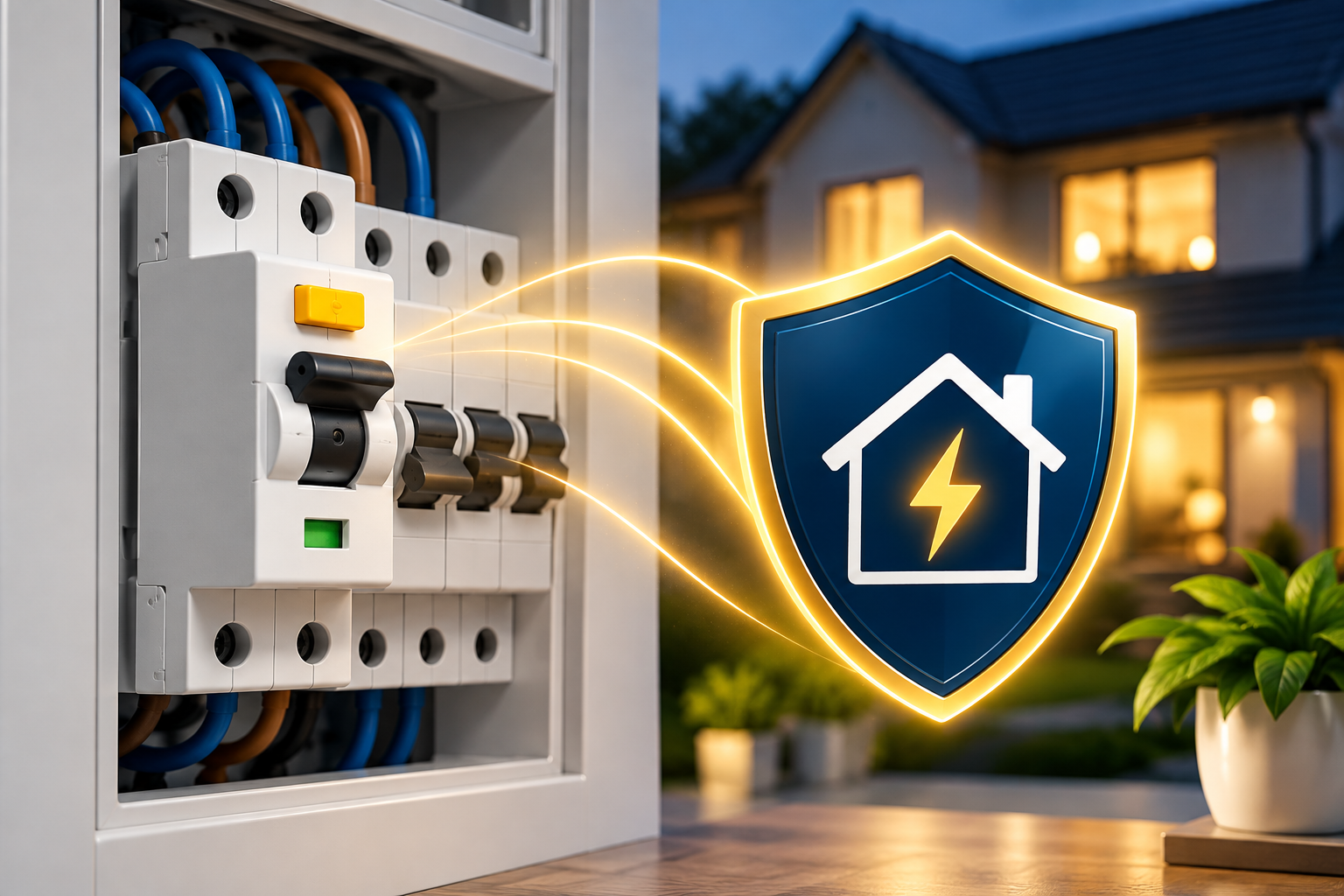
Benefits of RCD Protection: How It Helps Keep Your Home Safe
RCD protection is an important safety feature in modern electrical installations. The Benefits of RCD Protection include quickly disconnecting electricity when an imbalance is detected, helping reduce electrical risks and protect homeowners from electric shock.
What Is an RCD?
An RCD, or Residual Current Device, monitors the flow of electricity through a circuit. If it detects a difference between the current flowing in and returning from the circuit, it can disconnect the supply.
This provides an additional layer of protection alongside other protective devices.
How Does RCD Protection Improve Electrical Safety?
One of the main Benefits of RCD Protection is its ability to respond quickly to certain electrical faults.
An RCD can help reduce the risk associated with current flowing through an unintended path, including situations where a person comes into contact with a live part.
This is why how RCD protection improves electrical safety is an important consideration when assessing a home’s electrical installation.
Protection Against Electric Shock
A key benefit is RCD protection against electric shock.
If an electrical fault creates a current imbalance, the RCD can disconnect the circuit rapidly. It is not a guarantee against every type of electric shock, but it can provide valuable additional protection.
Why Is RCD Protection Important in a Home?
The Benefits of RCD Protection are particularly useful in homes where electrical equipment is regularly used.
RCD protection can provide additional safety for circuits supplying areas such as:
- Kitchens
- Bathrooms
- Outdoor equipment
- Sockets
- Portable electrical equipment
- Other circuits where additional protection is appropriate
The exact protection required depends on the design and condition of the electrical installation.
How Do RCDs Protect Your Home?
Understanding how RCDs protect your home is simple: they continuously monitor electrical current and can switch off the supply when they detect a potentially dangerous imbalance.
This can help limit the duration of certain electrical faults and reduce the associated risk.
However, an RCD is only one part of an electrical safety system. Proper wiring, earthing, bonding and suitable circuit protection are also important.
RCD Protection Benefits for Older Homes
Older electrical installations may have been designed before modern protection requirements became common.
The RCD protection benefits can therefore be particularly relevant when an older electrical system is being assessed or upgraded.
If your consumer unit is outdated, an electrician can assess whether improvements are appropriate.
RCD Protection During a House Rewire
A house rewire provides an opportunity to review the property’s overall electrical protection.
The Benefits of RCD Protection can be considered alongside the condition of existing wiring, circuits and the consumer unit.
During a rewire, the electrician can assess the installation and determine what protective measures are suitable for the new system.
Can an RCD Replace Other Circuit Protection?
No. An RCD and other protective devices perform different functions.
An RCD primarily responds to certain current imbalances, while devices such as MCBs provide protection against issues such as overloads and short circuits.
This means the Benefits of RCD Protection should be considered as part of a complete electrical safety system rather than as a replacement for all other protection.
Signs Your RCD May Need Attention
If your RCD repeatedly trips, it should not simply be reset without understanding why.
Possible causes can include:
- Faulty appliances
- Damaged wiring
- Moisture
- Circuit faults
- Electrical equipment problems
Repeated tripping is a reason to have the installation investigated by a competent electrician.
The Value of Professional Electrical Assessment
The Benefits of RCD Protection depend on having suitable equipment correctly installed and maintained.
If you are unsure whether your home has appropriate RCD protection, a qualified electrician can assess the installation and explain whether an upgrade or further investigation is required.
Conclusion
The Benefits of RCD Protection include providing additional protection against certain electrical faults and reducing the potential risk from electric shock.
An RCD should not be viewed as the only safety measure in a home. Good-quality wiring, suitable circuit protection, earthing and correct installation all work together to support electrical safety.
If you are planning electrical upgrades or a house rewire, professional assessment can help ensure the protection provided is appropriate for your property.
FAQs
RCD protection provides an additional layer of electrical safety by quickly disconnecting a circuit when it detects certain current imbalances. This can help reduce the risk of serious electric shock and some electrical faults.
An RCD can detect current flowing through an unintended path and disconnect the circuit quickly. This can reduce the duration of exposure to electrical current, although it does not eliminate every risk of electric shock.
RCD protection is important because it adds another level of protection to the electrical installation, particularly for circuits where additional protection is appropriate, such as socket and outdoor circuits.
RCDs can help reduce the risk associated with some earth-leakage faults, but they are not designed to replace other forms of circuit protection or prevent every type of electrical fire.
Repeated tripping can indicate a fault with an appliance, wiring or circuit. Avoid repeatedly resetting it and have the cause investigated by a competent electrician.
The appropriate protection depends on the property’s electrical installation and the applicable requirements. A qualified electrician can assess the existing installation and advise whether improvements are needed.
Yes. A house rewire is an opportunity to review the property’s protective devices and install suitable RCD protection as part of the new electrical installation where required.
A NAPIT-registered electrician can carry out relevant electrical work within the scope of their registration. When choosing an electrician, check their current registration, qualifications and experience with the type of work required.
Leave a Reply